If you’ve ever taken a fitness class and thought, “Wow, this is HARD,” then you’re not alone! Feeling your muscles shake, burn, or fatigue during a workout is often a sign that you’re challenging yourself, and that’s a good thing.

But it’s important to know and understand that there’s a difference between struggling during a workout and straining during a workout. Knowing the difference can help you push your limits, build strength, and get more out of your fitness classes while also knowing when your body needs you to modify or stop.

What is Struggling During Exercise?

Struggling during exercise simply means your body is being challenged.

You might feel your muscles shaking during a barre hold, notice a deep burn during a strength exercise, or feel like those last few reps take significantly more effort. You may even think, “I don’t know if I can do one more!”

That feeling is completely normal. In fact, a good workout shouldn’t necessarily feel easy.

Whether you’re taking a Barre class, Mat Pilates class, a Lagree Megaformer workout, Strength class, or another group fitness class, your instructor is intentionally creating challenges that require your muscles to work.

And sometimes, that means you’re going to struggle.

When you challenge your muscles, they become fatigued. Over time, consistently challenging your muscles helps your body adapt and become stronger. You don’t necessarily need heavy weights to create that challenge, either. Bodyweight exercises, lighter weights, resistance bands, and even holding a position for an extended period of time can create plenty of resistance.

In other words, struggling doesn’t mean you’re doing something wrong. It means you’re working hard.

What Does Struggling Feel Like?

Everyone experiences exercise differently, but normal muscular fatigue can include:

  • Muscles shaking or trembling
  • A deep muscular burn
  • Feeling fatigued toward the end of a set
  • Needing extra concentration to maintain your form
  • Feeling like you only have a few more reps left
  • Having to work harder to hold a position

The key is that you’re still able to control the movement and maintain proper form.

That final rep might feel nearly impossible. Your legs might be shaking while pulsing in Barre class. Your core might be burning during Mat Pilates. Your arms might feel like they have nothing left during a Lagree class.

That’s the struggle, and it’s part of getting stronger.

What Is Straining During Exercise?

Straining is different from normal muscular fatigue.

Instead of feeling the expected challenge in the muscles you’re working, straining may feel like your body is signaling that something isn’t right. This can include sharp or sudden pain, pinching, pulling, unusual pressure, or pain in a joint rather than the working muscle.

You may also notice that you’re compensating for the movement, losing control of your form, or holding your breath because the exercise has become too difficult.

Straining is not something you need to push through.

While some discomfort is expected when challenging your muscles, pain that feels sharp, unusual, or concerning is a reason to stop and reassess the movement. Your workouts should challenge you, but you shouldn’t feel like you have to ignore pain or discomfort to prove you’re working hard.

Don’t Push Through Strain!

There’s a difference between challenging your body and ignoring its warning signs.

When you’re experiencing normal muscular fatigue, you can typically continue exercising with proper form and control. But if you’re experiencing sharp pain, joint pain, pinching, or another sensation that feels abnormal, continuing to push through it isn’t the goal.

Pushing past your comfort zone is encouraged. Pushing through pain is not. Your goal should be to challenge your body while still respecting its limits.

Struggling vs. Straining: What’s the Difference?

A simple way to think about it is:

Struggling = “This is hard.”

Straining = “Something feels wrong.”

Struggling typically comes from muscular fatigue and the effort required to complete a challenging exercise. Straining can be a sign that you need to modify the movement, reduce the intensity, or stop altogether.

Learning to recognize these signals is an important part of becoming a stronger and more confident exerciser.

Modifications Are Part of the Workout

At Mega Barre Youngstown, our instructors provide modifications throughout every class to help you find the right level of challenge for your body.

A modification doesn’t mean you’re taking the “easy” way out. It means you’re adjusting an exercise so you can continue getting a proper workout while maintaining control and good form.

You may need to decrease your range of motion, change your positioning, use lighter resistance, take a break, or try a completely different variation of an exercise.

There is no shame in modifying. In fact, knowing when and how to modify is an important part of becoming a stronger, more knowledgeable exerciser. We highly encourage modifying exercises when needed!

And if an exercise doesn’t feel right, tell your instructor! We can help you find a modification that still challenges the muscles you’re working without unnecessarily aggravating your body.

Challenge Yourself, But Listen to Your Body

The next time you’re in class and your muscles start shaking, don’t immediately assume you need to stop. Ask yourself: “Are my muscles working hard, or does something feel wrong?”

If you’re feeling the burn, fatigue, or shake while maintaining control, keep going. Challenge yourself beyond your comfort zone and see what you’re capable of.

But if you’re experiencing sharp, unusual, or concerning pain, stop and tell your instructor.

At Mega Barre Youngstown, we want you to embrace the shake, push your limits, and discover your strength. We also want you to feel confident knowing that our instructors are there to help you modify movements and find the right challenge for your body.

Ready to challenge yourself? Come take a class at Mega Barre Youngstown and see what you’re capable of!

When you hear the phrase “low impact workout,” what comes to mind?

Maybe you picture something slow, gentle, or easy. Maybe you assume that if you’re not jumping, sprinting, or completely out of breath, you’re not getting a challenging workout.

But here’s the truth: low impact does not mean low intensity.

At Mega Barre Youngstown, we believe some of the most effective workouts are the ones that challenge your muscles without unnecessarily beating up your body. From Barre and Mat Pilates to Lagree, Strength, and Bounce, our classes are designed to help you build strength, improve mobility, and create a fitness routine you can actually maintain.

Here’s why low impact exercise can be incredibly effective and why it may be exactly what your body needs.

1. Low Impact Doesn’t Mean Low Intensity

The terms low impact and low intensity are often used interchangeably, but they aren’t the same thing.

Low impact exercise refers to how much stress or force is placed on your joints during movement. Intensity, on the other hand, refers to how hard your body is working.

You can have a low impact workout that is high intensity and leaves your muscles shaking.

Think about holding a squat, performing small pulses in Barre, moving slowly through a Lagree Megaformer exercise, or maintaining a challenging plank in Mat Pilates. None of these movements require jumping—but your muscles are still working hard.

That’s the magic of low impact fitness: you don’t need high impact movements to create a high quality workout.

At Mega Barre, our instructors use controlled movements, resistance, repetitions, and time under tension to challenge your muscles while keeping movements intentional and joint-friendly.

2. Low Impact Exercise Is Easier on Your Joints

Your joints work hard every day. Running, jumping, and other high impact activities can place significant repetitive stress on your knees, hips, ankles, and other joints.

That doesn’t mean high impact exercise is inherently bad or wrong. It simply isn’t the right choice for everyone or for every workout.

Low impact exercises involve less force on the body and reduce repetitive pounding on your knees, hips, ankles, and spine. That means you can train consistently while being kinder to your body.

This can be especially appealing for people who are:

  • New to exercise
  • Returning to fitness after time away
  • Looking for a joint-friendly workout
  • Cross-training alongside other activities
  • Interested in maintaining an active lifestyle as they age

And because low impact movement can be easier on your body, it can make it easier to stay consistent—which is one of the most important pieces of any fitness routine.

3. Low Impact Workouts Can Build Serious Strength

Fun fact: You don’t have to lift the heaviest weights in the gym to build strength.

Strength training is about more than the amount of weight you’re lifting. Your muscles can be challenged through resistance, bodyweight exercises, controlled movement, repetitions, and time under tension.

One of the ways we challenge your muscles at Mega Barre is through time under tension.

Time under tension simply means increasing the amount of time your muscles are actively working during an exercise. Instead of quickly performing a movement and immediately releasing the muscle, you might slow it down, hold a position, add small pulses, or perform controlled repetitions.

You may not be holding a 50-pound dumbbell, but your muscles are still working to maintain position. Add pulses, a longer hold, or several controlled repetitions, and suddenly that seemingly simple exercise becomes very challenging.

A small movement doesn’t necessarily mean an easy movement. Small movements can create big muscle fatigue when your muscles are under tension for longer periods of time.

Over time, strength training can help improve muscular endurance, stability, balance, posture, and functional strength; the kind of strength that supports you both inside and outside the studio.

So whether you’re using your body weight, resistance bands, springs, light weights, or the Megaformer, it’s not always about how much you’re lifting. It’s about how effectively you’re challenging your muscles.

That’s the beauty of low impact strength training: you can work incredibly hard without needing to lift heavy weights.

4. Low Impact Movement Can Improve Mobility

Strength is important, but so is your ability to move well.

Mobility refers to your ability to actively move your joints through their available range of motion. Good mobility can help you move more comfortably and perform everyday activities with greater ease.

Many low impact workouts incorporate controlled movement, stretching, balance, and exercises that take your body through different ranges of motion.

At Mega Barre, movement isn’t just about completing as many repetitions as possible. It’s about learning how to control your body, finding proper alignment, and moving with intention.

The combination of strength and mobility can translate into everyday life.

Bending down to pick something up. Getting off the floor. Reaching overhead. Climbing stairs. Carrying groceries.

Fitness isn’t just about what you can do during a 50-minute class. It’s about how you feel in the other 23 hours of your day.

5. Low Impact Workouts Can Be More Sustainable Long Term

Here’s perhaps the biggest reason we love low impact fitness: You can keep doing it.

Since low impact workouts are easier on the body, you’re more likely to stay consistent and injury-free over the long term.

The “hardest workout possible” isn’t necessarily the best workout for you. If a workout leaves you so exhausted or sore that you don’t want to exercise again for several days, it’s difficult to build consistency.

And consistency is what ultimately matters.

A sustainable fitness routine should fit into your life, not completely take over your life.

Low impact workouts can provide an effective way to build strength, improve mobility, challenge your cardiovascular system, and stay active without making every workout feel like punishment.

Your fitness journey doesn’t have to be an all-or-nothing cycle.

You don’t have to destroy yourself on Monday and spend the rest of the week recovering.

You can work smarter, not harder.

Lasting results are built when you find a workout you can enjoy, stay consistent with, and continue doing for years—not just a few weeks.

Ready to Experience It for Yourself?

Come see what low impact fitness can do for you at Mega Barre Youngstown.

Whether you want to build strength, improve mobility, try something new, or simply find a workout you actually look forward to, our studio is here to help you move better and feel stronger.

Your strongest workout doesn’t have to be your hardest workout. It just has to be one you keep showing up for.


Back-to-School, Back-to-You: How to Get Back into Your Mega Barre Groove

Ah, back-to-school season. The smell of freshly sharpened pencils. The endless school supply lists. The carpool chaos. And let’s not forget the “Wait, you need another form signed?” moments at 9 p.m.

It’s easy to let your own fitness routine slide when you’re running kids to practice, packing lunches, and trying to remember which day is pajama day. But here’s the truth: you can’t pour from an empty coffee cup (or wine glass…no judgment). Mega Barre isn’t just a workout — it’s your recharge station. And you deserve it.

Here are some actually doable ways to slide yourself back into the barre and get that routine feeling effortless again:

1. Pre-book like you mean it.
Sign up for your classes early in the week so they’re locked in your calendar. Bonus motivation: that late cancel or no-show fee is basically the same as another Starbucks run — so you might as well get your workout and your latte later.

2. Treat it like a school subject.
Your class is on the schedule — no different than your kid’s math class. Write it down, set an alarm, and make it non-negotiable.

3. Pack your “workout bag” like a lunchbox.
Keep your grippy socks, water bottle, and hair tie ready to go the night before. No scrambling = no excuses.

4. Carpool swaps = mega barre time.
If you’re driving soccer pick-up Monday, have another parent cover Thursday so you can hit Mega Barre guilt-free.

5. Use the “I’ll just go for 20 minutes” trick.
Tell yourself you’ll only do part of class if you’re tired. Spoiler: once you’re there, you’ll stay for all of it.

6. Think of it as homework for your health.
Consistency pays off — and the “grade” is feeling stronger, calmer, and less like you might scream into a pillow by 8 p.m.

Back-to-school doesn’t have to mean back-burner for you. When you take care of your body and mind, the whole family benefits (translation: fewer meltdowns — yours and theirs). So grab your mat, shake it at the barre, and let’s make this the season you stick with your routine.


In the quest for fitness, many of us envision ourselves with bulging biceps or six-pack abs, but what about the often overlooked, lean muscle mass? While it might not earn you a spot on the cover of a fitness magazine, building lean muscle is crucial for the average person, and here’s why.

At Mega Barre, where we’re all about finding the fun in fitness, we prioritize strength training and proper form. But why the focus on lean muscle? Well, let’s start with the basics.

You’ve probably heard of slow-twitch muscle fibers, those endurance powerhouses that help us keep going during long, steady activities like hiking or cycling. They’re like the tortoise in the muscle fiber world, slow and steady wins the race. But here’s the kicker: they’re notoriously stubborn to activate. That’s where the magic of Lagree fitness and barre comes in.

Our classes aren’t just about sculpting your physique; they’re about working those slow-twitch fibers into action. With controlled movements and isometric holds, we’re not only toning those muscles but also teaching them to endure. It’s like a marathon for your muscles, without having to lace up your running shoes.

But don’t worry, we’re not leaving out the fast-twitch fibers—the sprinters of the muscle world. By incorporating dynamic movements and resistance training, we’re hitting those fast-twitch muscles too. So whether you’re in it for the long haul or need a burst of power, we’ve got you covered.

Now, let’s talk bones. Strength training isn’t just about looking good in a tank top; it’s about keeping your skeleton strong too. When you challenge your muscles, you’re also stimulating bone growth, which can help prevent osteoporosis down the line. It’s like giving your bones a little extra love with each rep.

But wait, there’s more! Building lean muscle mass can also rev up your metabolism, making it easier to maintain a healthy weight. Plus, it improves your posture, reduces the risk of injury, and even boosts your mood by releasing feel-good endorphins.

So, whether you’re a fitness fanatic or a casual gym-goer, don’t underestimate the power of building lean muscle. And if you’re looking for a fun and effective way to do it, come join us at Mega Barre. We’ll be here, lifting and laughing our way to stronger bodies and brighter smiles.

Not only is it more fun to workout with a friend, but there’s actually research to back a whole list of benefits!  Grab your bestie and get to the studio with you and you both will be rocking your mega barre bod!

Here’s Why:

1. Increased Motivation and Adherence:
– People who exercise with friends are more likely to stick to their fitness routines. A study published in the *Journal of Social Sciences* found that individuals were more consistent with their exercise when they did it with a friend .
– The American College of Sports Medicine reports that social support is a critical factor in maintaining long-term exercise habits.

2. Enhanced Performance:
– Exercising with a partner can lead to improved performance. A study in *Annals of Behavioral Medicine* showed that participants exercised longer and more intensely when paired with a workout buddy who they perceived as fitter .

3. Increased Enjoyment and Reduced Stress:
– Social workouts are often more enjoyable, which can make the experience more positive and engaging. The *International Journal of Stress Management* found that people who exercised with others reported higher levels of enjoyment and lower levels of stress compared to those who worked out alone .

4. Accountability and Support:
– Friends provide accountability, making it harder to skip workouts. Research indicates that social support from friends can significantly boost the likelihood of adhering to exercise routines .
– A survey by the fitness app Strava found that 87% of participants felt more motivated when they exercised with friends .

5. Broader Social Benefits:
– Group exercise can enhance social bonds and provide opportunities to meet new people. The *American Journal of Health Promotion* highlighted that group fitness classes can improve social well-being and create a sense of community .

6. Improved Mental Health:
– Working out with friends can reduce feelings of loneliness and depression. A study in *JAMA Psychiatry* found that social exercise groups provided significant improvements in mood and overall mental health .

7. Safety and Technique:
– Having a friend can enhance safety, particularly during weightlifting or high-intensity workouts, as they can assist with spotting and ensuring correct form, reducing the risk of injury .

Exercising with friends can lead to better adherence, enhanced performance, greater enjoyment, and significant mental and social benefits, making it a powerful strategy for maintaining a healthy lifestyle.


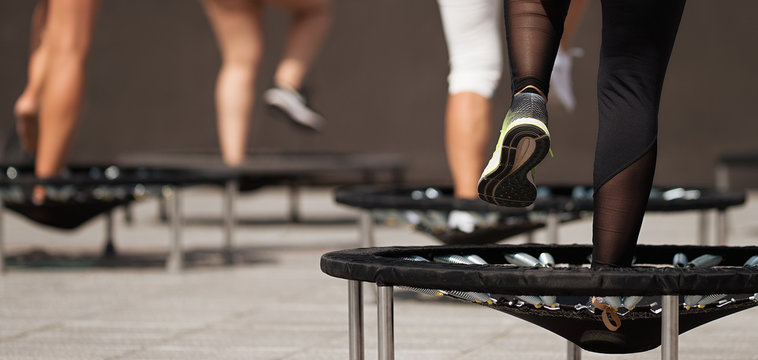
Looking for a fun and effective way to enhance your fitness routine while being gentle on your joints? Look no further than rebounding on a mini trampoline! At our Mega Barre Youngstown, we’re proud to offer “Bounce” classes that harness the power of this low-impact exercise for a full-body workout that’s as enjoyable as it is beneficial.

Here are just a few reasons why rebounding might be your new favorite way to break a sweat:

  1. Low Impact, High Results: Unlike activities like running or high-intensity interval training (HIIT), rebounding is incredibly gentle on the joints. The surface of a mini trampoline absorbs much of the impact, reducing the strain on your ankles, knees, and hips. This makes it an ideal exercise for people of all fitness levels, including those with joint pain or injuries.
  2. Calorie Burning Powerhouse: Don’t let its low-impact nature fool you—rebounding can torch calories just as effectively as running! In fact, research has shown that bouncing on a mini trampoline can burn up to the same amount of calories as jogging, making it a fantastic option for anyone looking to shed pounds or maintain a healthy weight.
  3. Lymphatic Drainage: One of the lesser-known benefits of rebounding is its ability to improve lymphatic drainage. The up-and-down motion of bouncing on a mini trampoline helps to stimulate the lymphatic system, which plays a crucial role in removing toxins and waste from the body. By enhancing lymphatic circulation, rebounding can boost your immune system, reduce inflammation, and promote detoxification.

At Mega Barre Youngstown, our “Bounce” classes are designed to maximize the benefits of rebounding in a fun and supportive environment. Led by experienced instructors, these dynamic workouts incorporate a variety of movements and exercises to target different muscle groups while keeping you engaged and motivated.

Whether you’re looking to improve your cardiovascular health, tone your muscles, or simply have a blast while exercising, rebounding on a mini trampoline offers something for everyone. Join us at our fitness studio and experience the exhilarating power of “Bounce” for yourself—your body will thank you!
Class

Let’s talk about why we’re all about incorporating props like small Pilates balls, sliders, weights, and bands into our workouts. It’s not just about adding flair – it’s about revolutionizing your fitness routine and making every class an unforgettable experience.

Imagine walking into a barre class and being greeted by a colorful array of props. From the small Pilates ball that promises to add resistance to sliders that challenge your stability, weights for that extra oomph, and bands to really feel the burn – it’s like stepping into a fitness playground!

But why the props, you ask? Well, we believe in keeping things fresh and exciting. No two barre classes should ever be the same. By incorporating different props, we’re keeping your muscles guessing, pushing you past your limits, and ensuring you never get stuck in a rut.

And let’s talk inclusivity. Barre isn’t just for prima ballerinas (though they’re always welcome!). It’s for everyone – regardless of age, fitness level, or coordination skills. At Mega Barre, we’re all about creating a space where everyone feels empowered and supported on their fitness journey.

So, whether you’re a seasoned barre pro or a total newbie, there’s a spot for you at the barre. Let’s sweat, smile, and shimmy our way to stronger bodies and brighter days. See you at Mega Barre, where the magic happens! 

Hey there, bootylicious barre babes and fitness enthusiasts! Let’s talk about why we’re all about lifting those derrières in our favorite barre classes. Spoiler alert: it’s not just about rocking those yoga pants (though they do look fabulous).

Picture this: you’re in bridge pose, channeling your inner Beyoncé and lifting those hips to the sky. Then there’s the booty kicks, where you’re practically kicking your own butt (literally). And let’s not forget about those donkey kicks and pretzel moves – cute names, intense workout.

But why do we put ourselves through these delightful (read: challenging) exercises? Well, let me spill the beans. In classic barre moves like bridge, booty kicks, donkey kicks, and pretzel, we’re not just sculpting a peachy posterior. Oh no, we’re diving deep into the magical world of glute muscles.

Here’s the scoop: your glutes aren’t just one big muscle – they’re actually made up of three different parts and they all need some loving individually. Think of them as the dynamic trio of your booty, working together to keep you strong, stable, and ready to take on the world.

Now, why should you care about having a strong glute game? Well, my friend, your glutes aren’t just there to fill out your favorite jeans (though they do a stellar job). They’re also crucial for supporting your core, improving your posture, and preventing those pesky lower back pains that love to crash the party uninvited.

By giving those glutes some love in barre class, you’re not just sculpting a perky peach – you’re also building a foundation of strength and stability that’ll have you strutting through life with confidence.

So, the next time you’re squeezing your booty in those pretzel moves, just remember: you’re not just toning muscles, you’re building a powerhouse of strength that’ll have you feeling like a million bucks.

Keep lifting, keep kicking, and remember: the burn is just your glutes saying, “Thanks for the love, now let’s conquer the world.”

Let’s chat about why we’re all about that side body work in our favorite barre classes. Spoiler alert: it’s not just about getting those killer side abs (though that’s a nice bonus).

Picture this: you’re rocking those side line kicks, feeling like a graceful swan (or maybe a slightly wobbly duck, no judgment here). Then there’s the planks, where you’re channeling your inner superhero and praying your arms don’t turn to noodles. And let’s not forget about those clams – cute name, killer burn.

But why do we put ourselves through these delightful (read: torturous) moves? Well, let me break it down for you. In classic barre exercises like sideline kicks, planks, and clams, we’re not just targeting the usual suspects like the quads and glutes. Oh no, we’re diving deep into the magical world of oblique muscles.

Why Should I Care About Obliques?

Now, you might be thinking, “What the heck are obliques and why should I care?” Well, my friend, your obliques are like the secret agents of your core.

They’re the muscles responsible for twisting, turning, and keeping you stable in all sorts of funky positions.

What Do Obliques Do?

And here’s the kicker: strong obliques aren’t just about looking good in a crop top (though they definitely help). They’re also crucial for everyday movements like bending, twisting, and even just sitting up straight. So basically, they’re the unsung heroes of your core, keeping you upright and fabulous.

By giving those obliques some love in barre class, you’re not just sculpting killer side abs – you’re also improving your posture, boosting your balance, and preventing those pesky back injuries that love to get us down as we age.

So, the next time you’re wincing through those side line kicks, just remember: you’re not just toning muscles, you’re building a foundation of strength and stability that’ll have you slaying in and out of the studio.

Train Obliques at Mega Barre

Every class at Mega Barre Youngstown incorporates oblique work, along with the entire core. Experience the burn for yourself by booking a class!

Barre class in first position with one hand on barre and one hand on hip

Hey there, fellow barre babes and fitness fanatics! Let’s dive into the magical world of isometric work in our beloved barre classes. Spoiler alert: it’s not just about the cute leggings and killer playlist (though those definitely help).

So, picture this: you’re mid-plié, feeling the burn in places you didn’t even know existed. You’re holding onto that chair pose for dear life, wondering if your legs will ever forgive you. Yep, that’s the beauty of isometric exercises – the ones where you’re not really moving, but it feels like you’re climbing Mount Everest in leg warmers.

But why do we torture… I mean, challenge ourselves with these static holds? Well, let me break it down for you. In classic barre moves like pliés, chair poses, pulses, and holds, we’re not just targeting the big guns (hello, quads and glutes), we’re also giving some much-needed TLC to those tiny, often-overlooked supporting muscles.

You know the ones – they’re like the unsung heroes of your body, quietly keeping everything in check while the spotlight shines on the bigger muscles. But here’s the thing: those little guys are crucial for stability, balance, and preventing those dreaded injuries that love to crash the party uninvited.

That’s where isometric work swoops in to save the day. By holding those positions for what feels like an eternity (but is probably just a minute), we’re forcing those tiny muscles to step up to the plate and work their magic.

And here’s the cherry on top: muscular endurance. Muscular endurance is all about having the stamina to power through your day-to-day activities without feeling like you’ve been hit by a Mack truck.

Think about it – being able to lug groceries up three flights of stairs without breaking a sweat, or chasing after your dog like it’s no big deal. That’s the kind of strength we’re talking about here.

So, the next time you’re questioning your life choices while holding onto that barre for dear life, just remember: you’re not just toning muscles, you’re building strength and resilience. And hey, if a few cute leggings and killer playlists are involved, who’s complaining?

Keep pulsing, keep holding, and remember: the burn is just your muscles saying, “Thanks for the love, now let’s do it again tomorrow.”